How it works

The right fact, at the exact moment it matters

A scam only works if you act before you think. WallUPI checks three times on the way to a payment, folds what it sees into one reading, and answers with the smallest interruption that will do.

Three checkpoints, each one earlier than the loss

Protection is not one alarm at the end. The earlier a warning lands, the cheaper it is to walk away.

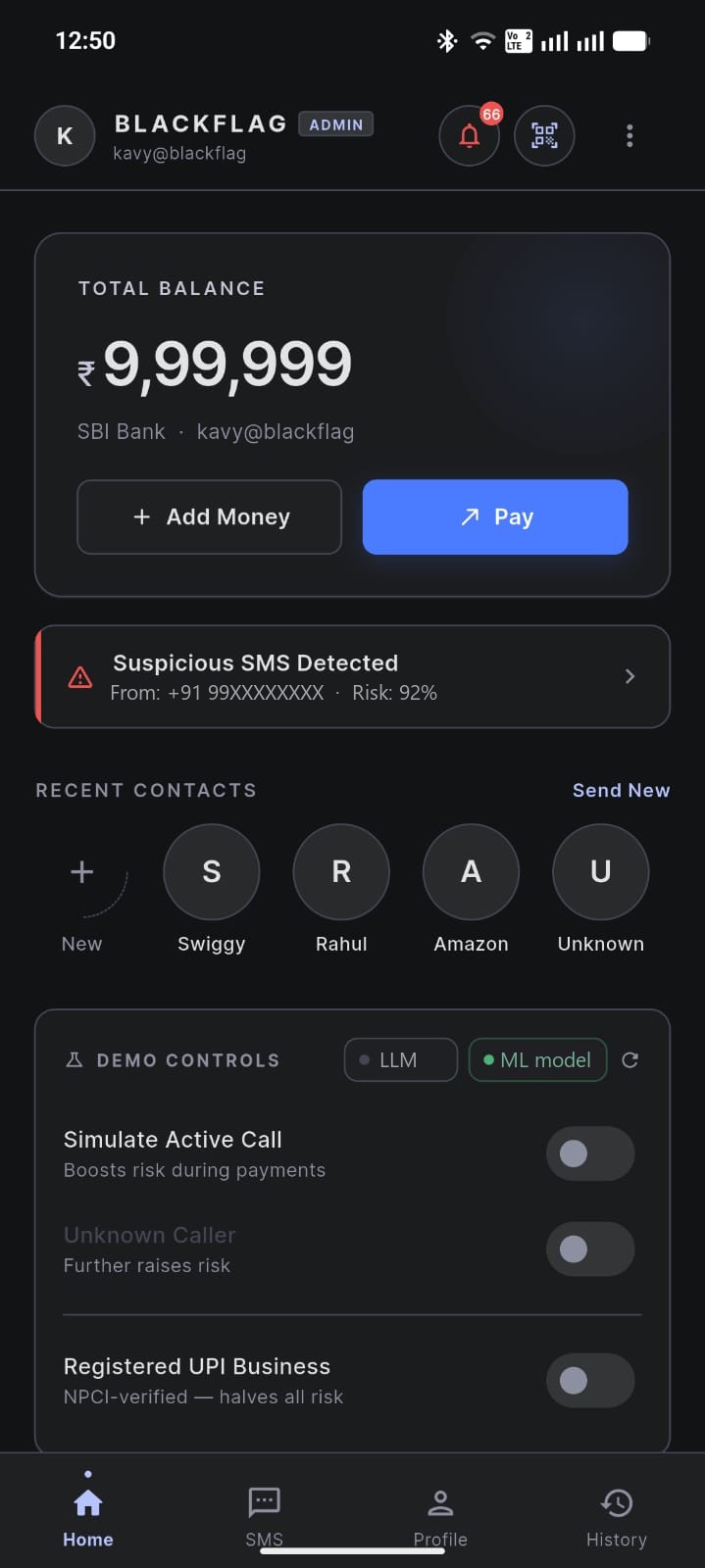
  1. Home screen with a red banner reading suspicious SMS detected, from a masked number, risk 92 percent.
    01 Before you pay

    The scam message is flagged on arrival

    A fresh “account blocked” text shows up on the home screen with its risk reading, before the scammer’s call has even started.

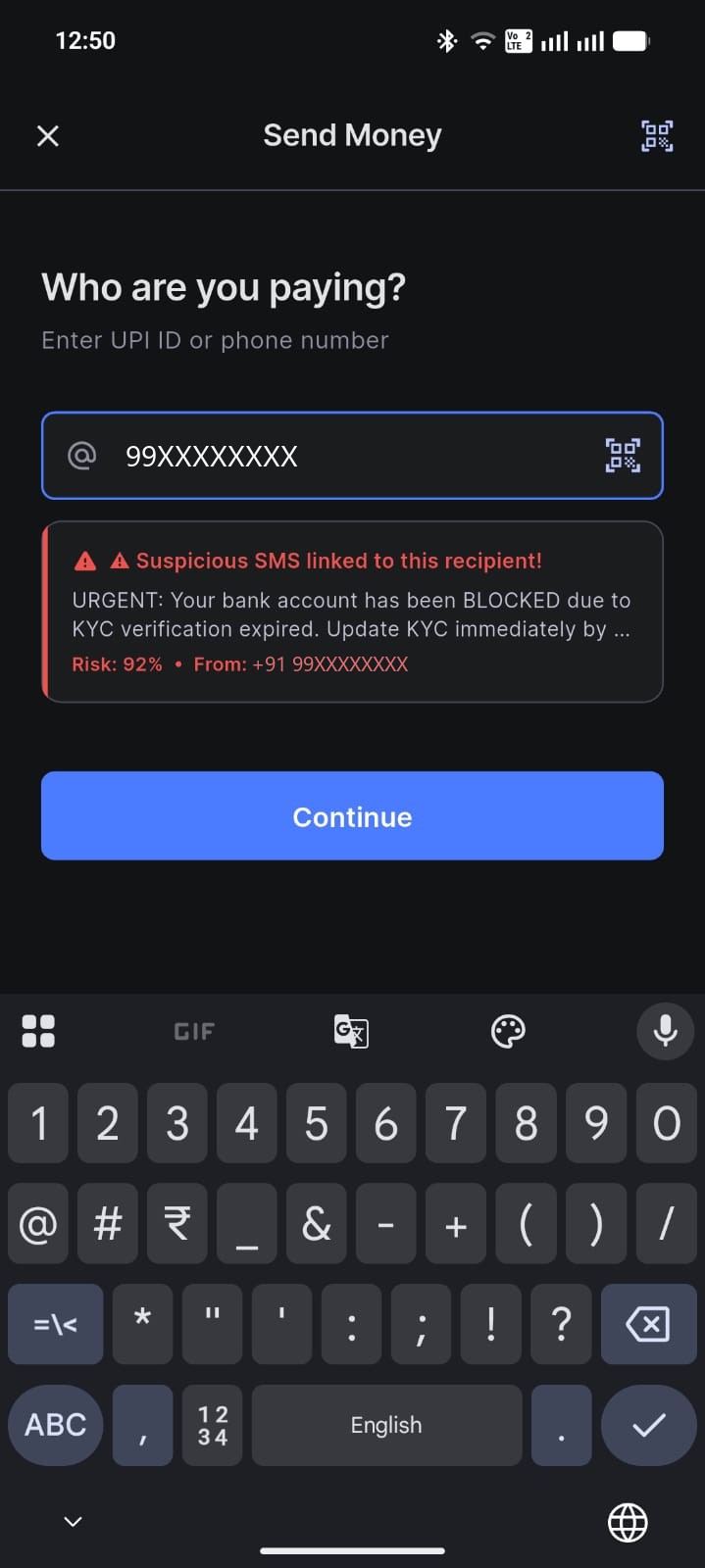
  2. Send money screen. A masked number is entered and a warning reads suspicious SMS linked to this recipient.
    02 As you enter the recipient

    The number is tied back to the message

    Type an ID and anything known about it surfaces at once, while backing out still costs you nothing.

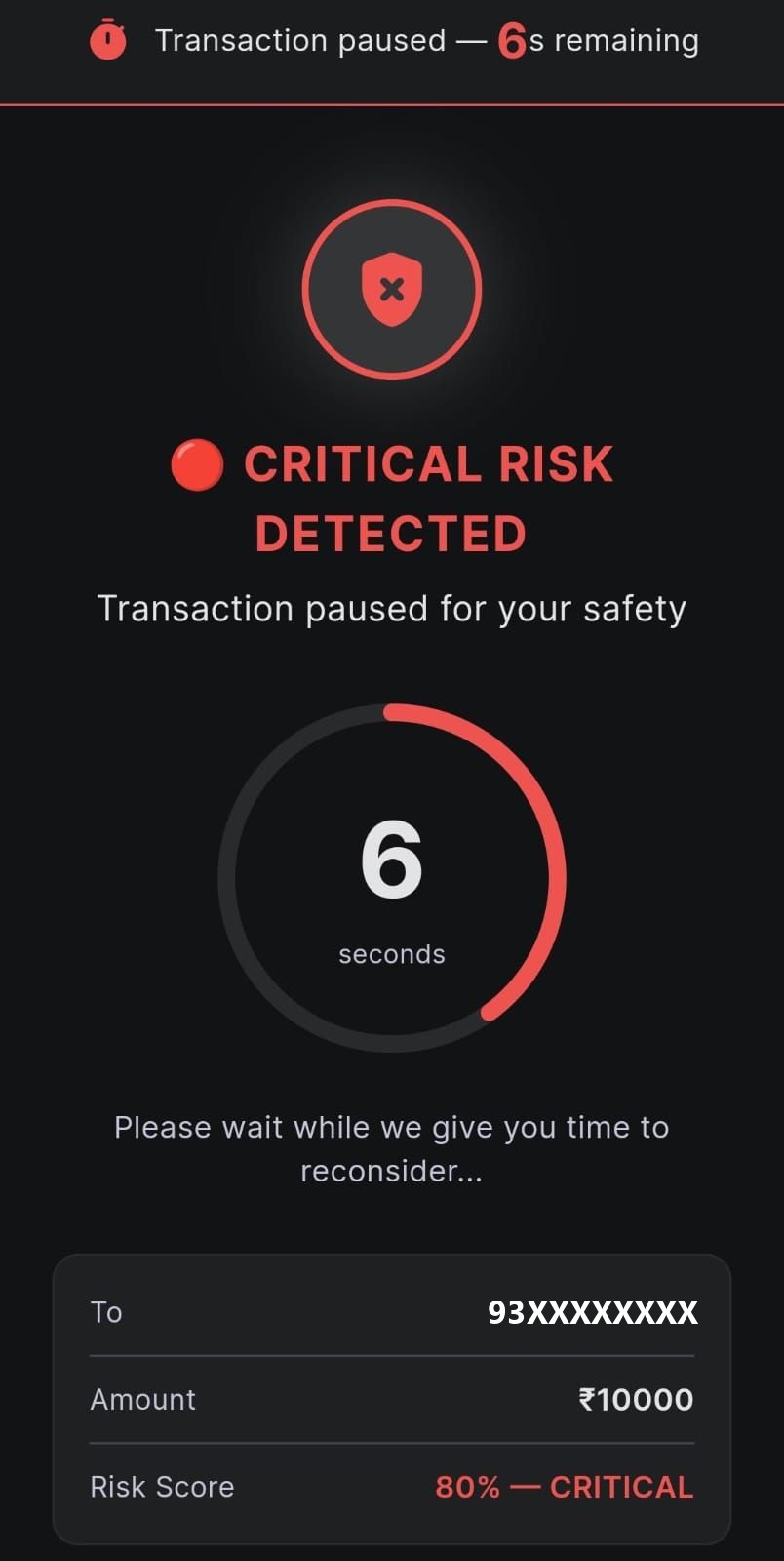
  3. Transaction paused screen: critical risk detected, a 6 second countdown to reconsider, ₹10,000 to a masked number, risk score 80 percent.
    03 At the moment you confirm

    Everything is weighed, and it can hold

    The last check sees the whole picture. When it all points one way, the payment is paused behind a countdown that gives you time to think.

Many signals in, one reading out

No single signal condemns a payment. A stranger is not a scammer, and a big amount is not a crime. It is the combination that moves the reading.

What it looks at
  • Who you are payingRecipient
  • Whether the amount fits youAmount
  • Whether a call is connectedCall
  • What recently arrivedMessages
  • How you got to the screenRoute
On your phone Risk engine
0–100

Every signal folds into one reading you can act on.

What it does about it
  • Stays quietThe payment goes through untouched
  • Flags itA short note on what looks off
  • Warns properlyA screen you read and confirm
  • Pauses the paymentA forced wait that breaks the pressure

What each signal means, and the scams they catch

Four levels, and the louder it gets the more it has found

Nothing is hidden and nothing is decided for you. Even at the top of the scale, the choice stays yours.

Level 1

Stays out of your way

Triggered byA payment that looks like your normal life: someone you have paid before, an ordinary amount.
What you seeNothing. The payment goes through at full speed.
Your moveNone. A layer that interrupts good payments gets switched off.
Level 2

A quiet flag

Triggered byOne thing does not sit right, often a message claiming your KYC has expired.
What you seeA banner naming the sender and how risky the message looks.
Your moveOpen it for the reasoning, or dismiss it.
Level 3

A warning you read past

Triggered bySignals line up: you are about to pay the number that sent the threatening message.
What you seeThat message quoted back, right above the button you were about to press.
Your moveAcknowledge it before you can continue.
Level 4

The payment is paused

Triggered byEverything at once: a flagged recipient, a scam message, an odd amount, a call still connected.
What you seeA stop screen with every factor ranked, and a short mandatory wait.
Your moveWait it out. A scammer’s whole method depends on you not having that minute.
Always explained

A warning you can check, not just obey

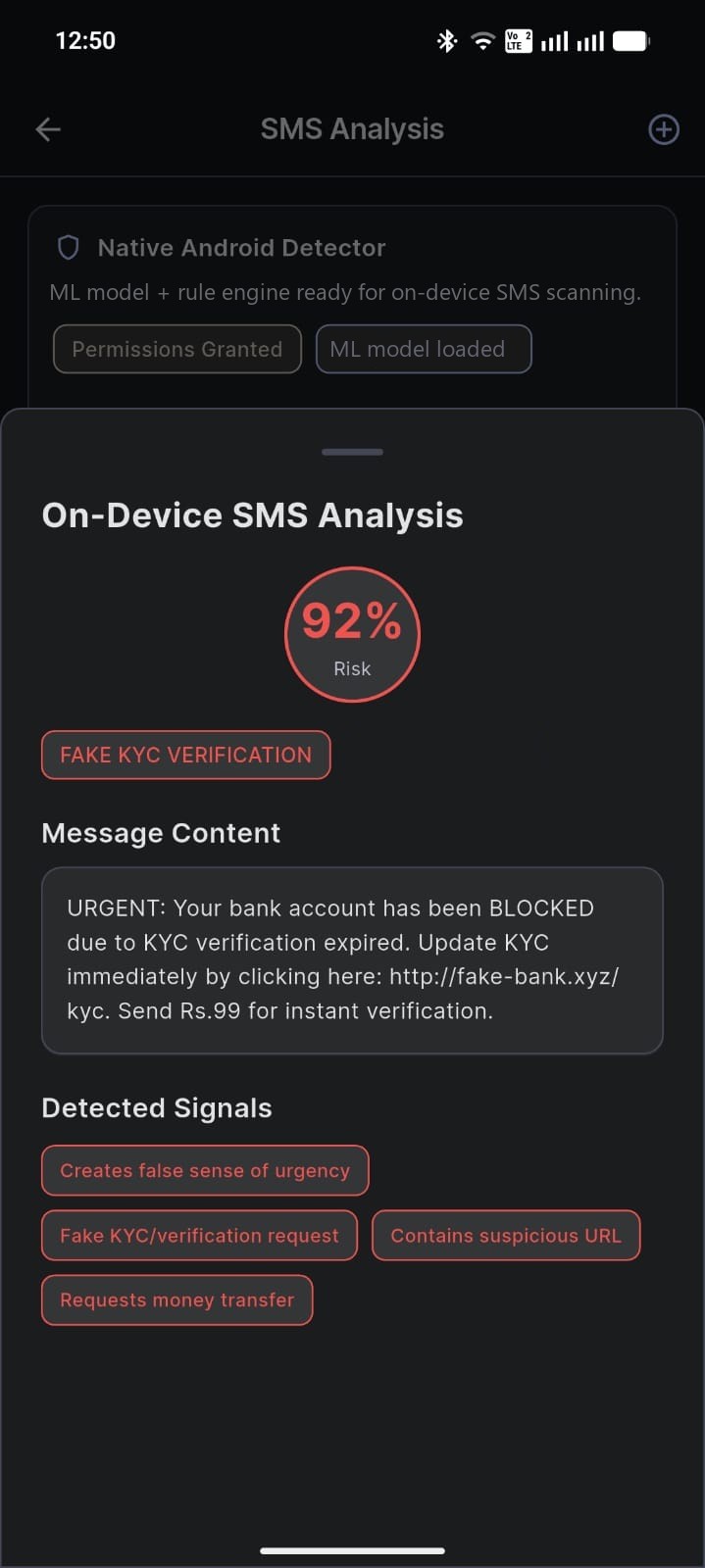
People learn to tap straight through warnings they cannot verify. So every flag opens into its reasoning, in ordinary language.

  1. The scam it resemblesNamed plainly, such as a fake KYC demand.
  2. The phrases that triggered itManufactured urgency, a payment demand, a fake link.
  3. How much each factor matteredSo one mild signal never looks like a crisis.
  4. The message itself, quoted backReading it calmly a second time is often enough.
On-device SMS analysis: a 92 percent risk reading, the label fake KYC verification, the message text, and four detected signals.
A flagged message opened up: the category, the reading, the text, and every signal behind it.
Try every level yourself

See it happen on your own phone

The demo walks through all four levels, including the paused payment, using safe test scenarios.